Ελληνικά
  English




























Bone Saw Machines: Essential Tools for Meat Processing
Definition
A bone saw machine—also known as an industrial meat saw or butcher bone saw—is a specialized piece of food processing equipment. Unlike handheld saws, these machines use high‑torque motors and tensioned blades to cut bone, frozen loads, and large meat portions quickly and precisely. They keep production lines efficient, reduce waste, and ensure consistent quality.
Benefits
- Throughput capacity: Cuts up to 200–250 kg/hour, ideal for both butcher shops and industrial plants.
- Precision: Blade stabilizers and guides deliver uniform thickness with variance under ±1 mm.
- Blade size ranges: Typically 1650–2500 mm, adjustable for different product volumes.
- Hygiene: Stainless steel, sealed components, and tool‑free guards reduce microbial risk.
- Capability: High‑torque models cut fresh and frozen products without stalling.
- Safety & Longevity: Average lifespan 8–10 years with proper maintenance; daily inspections extend blade life.
Comparisons
Bone Saw vs. Handheld Saw
- Performance: Bone saws cut faster and more consistently; handheld saws are slower and less precise.
- Durability: Industrial bone saws last 8–10 years; handheld saws wear out within 1–2 years.
- Cost: Bone saw machines range from €1,200–€4,500 depending on size and model; handheld saws cost under €100 but lack efficiency.
- Sanitation: Bone saws are designed for washdown and compliance; handheld saws lack hygiene features.
Bone Saw vs. Band Saw
- Purpose: Bone saws are engineered for meat and bone; band saws are general‑purpose (wood, metal).
- Safety: Bone saws include guards and emergency stops; band saws often lack food‑safe design.
- Durability: Bone saws withstand heavy frozen loads; band saws are not built for this stress.
- Cost: Band saws may be cheaper (€800–€1,500), but bone saws deliver ROI in food processing.
- Sanitation: Bone saws meet food safety standards; band saws are not compliant for meat use.
Selection
When choosing a bone saw, evaluate:
- Throughput needs (butcher shop vs. industrial plant)
- Blade specs (size, tension, stabilizers)
- Safety features (guards, emergency stops, ergonomic design)
- Cleaning ease (washdown resistance, tool‑free disassembly)
- Supplier: Purchase directly from KitchenPro, your trusted provider of professional Kitchen & Laundry Equipment.
KitchenPro Bone Saw Machines – Prices & Buy Online
- Pricing ranges: Entry models start at €1,200, mid‑range at €2,500–€3,000, premium industrial units at €4,500+.
- Buy online: Available exclusively through KitchenPro with secure checkout and fast delivery.
- Best choice: KitchenPro offers reliable models designed for durability, sanitation compliance, and professional performance.
Takeaway
Bone saw machines—whether called industrial meat saws, butcher bone saws, or part of broader food processing equipment—are the backbone of efficient meat processing. With the right model from KitchenPro, operators cut faster, safer, and with less waste, while ensuring consistent quality across every product line.
Why Bone Saw Machines Matter in Commercial Meat Processing

You’ll speed up throughput by using a bone saw machine that slices large and frozen cuts quickly and consistently. You’ll maintain uniform portion weights and reduce manual variability, which improves yield tracking and cost control.
You’ll also minimize contamination risk with stainless-steel surfaces and designed safety features that simplify cleaning and sanitation.
Faster, Consistent Cuts
How does a bone saw machine speed up production while keeping cuts uniform? You reduce downtime from cleaver jams and eliminate blade chatter by using a continuous, tensioned blade and a powerful motor that maintains RPM under load. The result: predictable, repeatable cross-sections and faster throughput per operator.
- Consistent feed rate minimizes variance.
- Stabilizers prevent lateral blade deflection.
- Adjustable guides ensure repeatable thickness.
- High-torque motors handle frozen loads without stalling.
You’ll free operators from manual sawing constraints and get uniform portions that simplify packaging, cooking times, and inventory control. The stainless work surface and optimized blade geometry let you push heavier cuts confidently, so you can scale production while keeping precision high and operator effort low.
Improved Hygiene Control
A commercial bone saw machine helps you enforce strict hygiene protocols by combining sanitary materials, enclosed cutting mechanics, and easy-to-clean surfaces that reduce microbial harborage points. You’ll maintain a controlled hygiene workflow because stainless steel surfaces, sealed bearings, and blade guards minimize contact zones and permit rapid, repeatable cleaning cycles. The design supports standard operating procedures: dismantle guards without tools, flush channels, and inspect welds for residue. You’ll lower contamination risk and speed regulatory compliance when sanitation training focuses on critical touchpoints, cleaning agents, and verification checkpoints. By integrating the machine into your plant layout, you’ll streamline product flow, separate dirty and clean zones, and reduce cross-contamination events. This practical approach preserves product integrity while giving you operational freedom and measurable hygiene outcomes.
Key Features That Make a Reliable Bone Saw Machine
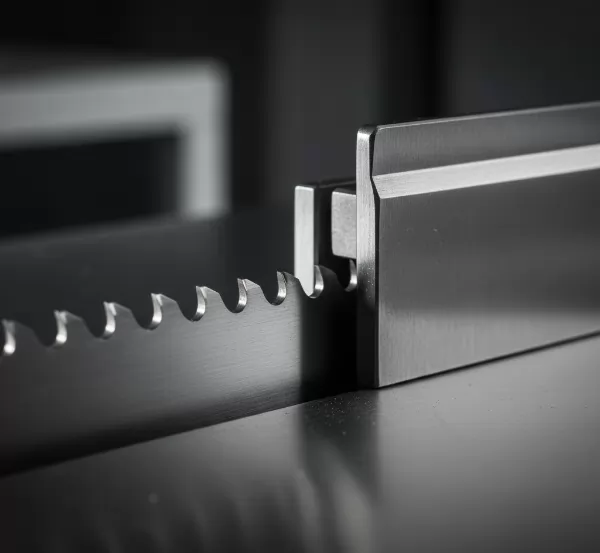
You’ll want a bone saw built with stainless-steel construction to ensure long-term corrosion resistance and easy sanitation.
Stainless surfaces reduce bacterial harboring and withstand frequent washdowns with disinfectants.
Prioritize grade 304 or 316 stainless for worktables, blade guards, and fasteners to maximize durability and food safety.
Durable Stainless-Steel Construction
Stainless-steel construction gives a bone saw machine the corrosion resistance, strength, and hygienic surface finish professionals rely on; you’ll get a rigid worktable and housing that withstands daily washdowns, acidic residues, and the mechanical stresses of sawing bone and frozen product. You’ll want durable stainless steel for longevity, low maintenance, and food-safety compliance in meat processing environments. It resists pitting, prevents contamination, and preserves tolerances under heavy loads.
- Corrosion resistance: extends service life in humid, acidic settings.
- Structural strength: maintains alignment and reduces vibration.
- Sanitation: smooth finishes speed cleaning and microbial control.
- Repairability: standardized stainless components simplify replacement.
Choose machines with certified food-grade alloys and welded seams so you can work freely, efficiently, and without compromise.
How to Choose the Right Bone Saw for Your Operation
How will you match a bone saw’s capacity and features to your workload and workspace? Assess throughput needs (kg/hr), blade width, motor horsepower, and table size against available floor space and power supply.
Run a cost benefit analysis comparing initial purchase, maintenance, and blade replacement to expected production gains.
Prioritize stainless-steel surfaces, non-slip bases, and blade stabilizers for durability and sanitation.
Decide on frozen-food capability if you’ll cut frozen items regularly.
Factor adjustable guides and scales for repeatable cuts.
Plan operator training: detail how to train staff on setup, blade changes, cleaning, and basic troubleshooting to minimize downtime.
Choose a model that balances autonomy — ease of use and quick maintenance — with the capacity you actually require.
Best Practices for Safe and Efficient Bone Saw Use
After picking a machine that matches your throughput and workspace, focus on operating procedures that keep staff safe and maintain efficiency. You’ll enforce bone safety protocols, control workflow, and minimize downtime. Train operators on correct feed angles, use push blocks, and never bypass guards. Monitor blade position and tension before each shift; verify blade lubrication schedules to prevent heat and wear.
Choose the right machine, enforce bone safety, train operators, and monitor blade tension and lubrication for safe efficient production.
- Inspect guards, stabilizers, putters, and non-slip base daily.
- Use calibrated push tools and maintain consistent feed rates.
- Log blade lubrication, tension, and replacement intervals.
- Enforce PPE: cut-resistant gloves, eye protection, and clear communication.
Document incidents, run short safety audits, and empower operators to stop the line if something’s wrong. This keeps production free and reliable.
Maintenance Tips to Extend the Life of Your Bone Saw
Want to keep your bone saw running at peak performance and avoid costly downtime? You’ll establish a strict maintenance regimen: daily wipe-downs with approved cleaners, weekly full disassembly for inspection, lubrication of bearings and guides per manufacturer specs, and monthly motor checks.
Replace blades at first sign of dulling to preserve cutting precision and reduce motor strain.
Prioritize blade sterilization after every shift—use validated thermal or chemical protocols and ensure drying to prevent corrosion.
Log every service action so you control uptime and parts life, and train staff to perform basic diagnostics safely.
Keep a spare blade and key components on hand to maintain independence from external repair delays; proactive care extends machine life and protects productivity.
Frequently Asked Questions
Conclusion
You’ve seen how bone saw machines boost throughput and consistency—so choose one matching your capacity and hygiene needs. Interestingly, properly maintained saws can reduce cutting downtime by up to 40%, directly improving line efficiency. Prioritize blade tensioning, stabilizers, stainless construction, and safety interlocks. Train staff on correct feed rates and sanitation protocols, and follow a strict maintenance schedule to preserve blade life and reliability—keeping operations precise, fast, and compliant.
At KitchenPro we support gastronomy professionals with kitchen equipment that combines innovation, reliability, high performance and sustainable energy saving solutions. Upgrade your kitchen easily and efficiently – see KitchenPro catalog with products.